
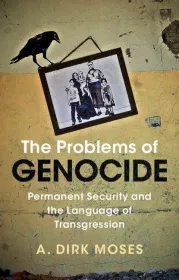
Genocide is not only a problem of mass death, but also of how, as a relatively new idea and law, it organizes and distorts thinking about civilian destruction. Taking the normative perspective of civilian immunity from military attack, A. Dirk Moses argues that the implicit hierarchy of international criminal law, atop which sits genocide as the 'crime of crimes', blinds us to other types of humanly caused civilian death, like bombing cities, and the 'collateral damage' of missile and drone strikes.
Talk of genocide, then, can function ideologically to detract from systematic violence against civilians perpetrated by governments of all types.
Völkermord ist nicht nur ein Problem des Massensterbens, sondern auch der Art und Weise, wie er als relativ neue Idee und Gesetz das Denken über zivile Zerstörung organisiert und verzerrt. Aus der normativen Perspektive der zivilen Immunität vor militärischen Angriffen argumentiert A. Dirk Moses, dass die implizite Hierarchie des internationalen Strafrechts, an deren Spitze der Völkermord als „Verbrechen der Verbrechen“ steht, uns für andere Arten von menschlich verursachten zivilen Todesfällen blind macht, wie etwa die Bombardierung von Städten und den „Kollateralschaden“ von Raketen- und Drohnenangriffen.
Die Rede von Völkermord kann also ideologisch dazu dienen, systematische Gewalt gegen Zivilisten durch Regierungen aller Art abzuschwächen.