
The Problems of Genocide
Permanent Security and the Language of Transgression
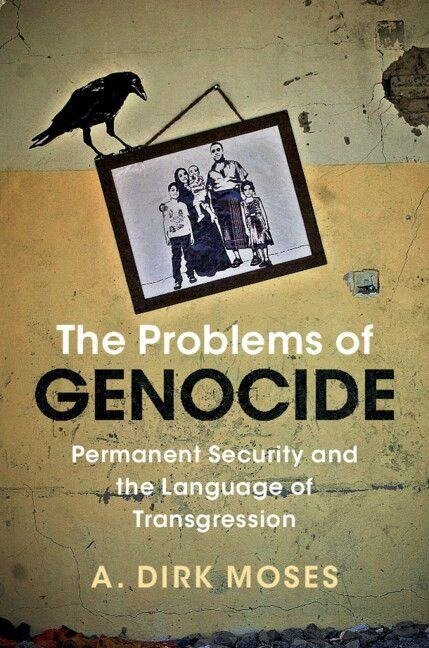
Genocide is not only a problem of mass death, but also of how, as a relatively new idea and law, it organizes and distorts thinking about civilian destruction. Taking the normative perspective of civilian immunity from military attack, A. Dirk Moses argues that the implicit hierarchy of international criminal law, atop which sits genocide as the 'crime of crimes', blinds us to other types of humanly caused civilian death, like bombing cities, and the 'collateral damage' of missile and drone strikes.
Talk of genocide, then, can function ideologically to detract from systematic violence against civilians perpetrated by governments of all types.
Völkermord ist nicht nur ein Problem des Massensterbens, sondern auch der Art und Weise, wie er als relativ neue Idee und Gesetz das Denken über zivile Zerstörung organisiert und verzerrt. Aus der normativen Perspektive der zivilen Immunität vor militärischen Angriffen argumentiert A. Dirk Moses, dass die implizite Hierarchie des internationalen Strafrechts, an deren Spitze der Völkermord als „Verbrechen der Verbrechen“ steht, uns für andere Arten von menschlich verursachten zivilen Todesfällen blind macht, wie etwa die Bombardierung von Städten und den „Kollateralschaden“ von Raketen- und Drohnenangriffen.
Die Rede von Völkermord kann also ideologisch dazu dienen, systematische Gewalt gegen Zivilisten durch Regierungen aller Art abzuschwächen.
The Problems of Genocide contends that this violence is the consequence of 'permanent security' imperatives: the striving of states, and armed groups seeking to found states, to make themselves invulnerable to threats.
- The first intellectual history of genocide that frames the concept as a problem rather than as an achievement
- Shows how genocide functions to mask and normalize other kinds of violence against civilians
- Highlights the function of 'permanent security' as the driver of civilian destruction
In The Problems of Genocide wird behauptet, dass diese Gewalt die Folge von Geboten der „permanenten Sicherheit“ sei: dem Streben von Staaten und bewaffneten Gruppen, die Staaten gründen wollen, um sich gegenüber Bedrohungen unverwundbar zu machen.
- Die erste intellektuelle Geschichte des Völkermords, die das Konzept als Problem und nicht als Errungenschaft darstellt
- Zeigt, wie Völkermord dazu dient, andere Arten von Gewalt gegen Zivilisten zu verschleiern und zu normalisieren
- Unterstreicht die Funktion der „permanenten Sicherheit“ als Treiber der zivilen Zerstörung
Table of contents and reading sample / Inhaltsverzeichnis und Leseprobe
Rezension / Review
Dies ist ein grundlegendes Werk, das die Basis, auf dem die Genozidstudien stehen, neu bereitet. Das Beunruhigende und Neue dieser monumentalen Untersuchung liegt in der Tatsache, dass die Diskursanalyse endlich auch die Genocide Studies eingeholt hat. Von Norbert Finzsch H/Soz/Kult 13.05.2022
More press reviews / Weitere Pressestimmen
'This refreshingly original book turns the problem of genocide on its head. Contrariwise to international law and the dominant memory regimes, Moses points at the aspiration for permanent security as the crux of the matter. Passionate and historically sweeping.' Maria Mälksoo, author of The Politics of Becoming European: A Study of Polish and Baltic Post-Cold War Security Imaginaries
'A pioneer of genocide studies, A. Dirk Moses has written a terrific, transgressive book destined to upend the field he has helped to define. Uncomfortable with morality tales, Moses is intent on smashing the hierarchy of international crimes established in the aftermath of World War II. A gut punch to conventional wisdom, this is critical global history at its best.' Jens Meierhenrich, author of Lawfare: A Genealogy (forthcoming)
'This brilliant, closely argued, and exhaustively referenced book makes a deeply persuasive case for replacing the prism of genocide with the crime of permanent security, calling out the multiple standards at play in the global order. A seminal paradigm-changer.' Nandini Sundar, author of The Burning Forest: India's War Against the Maoists
'Dirk Moses is the most original and provocative scholar writing on the problem of genocide. At its core deeply humanitarian, his book challenges every comfortable assumption of the meaning of genocide. This is essential reading for everyone concerned with human rights and mass atrocities.' Eric D. Weitz, author of A World Divided: The Global Struggle for Human Rights in the Age of Nation-States
'The Problems of Genocide can be strongly recommended to readers of this journal who have an interest in the macro-issues relating to criminal law and criminal justice, broadly conceived.' David O. Friedrichs, Rutgers
'… The Problems of Genocide is possibly one of the most significant works on the intellectual history of genocide ever since the notion entered the realm of the history of ideas.' Dimitrios A. Kourtis, Journal of Conflict and Security Law
'What's in a name? Why and how does it matter whether a particular situation is designated a genocide? And why is it problematic for us to categorise mass violence in this way? Dirk Moses' important new book … addresses these questions head on with an elegantly argued and intricate treatment of the problems at the heart of what he terms the 'language of transgression' - the concept and discourse of genocide … a rich, satisfying and provocative read.' Rachel Kerr, International Journal of Military History and Historiography