Drop Site News (Medienpräsenz)

1:02:25

Twenty-five years after 9/11, the United States is again fighting a major war in the Middle East. Drop Site’s Ryan Grim and Murtaza Hussain speak with Vali Nasr, professor of international affairs and Middle East studies at Johns Hopkins SAIS and a former senior adviser in the Obama administration, and Rob Malley, a senior fellow at Yale’s Jackson School of Global Affairs, former U.S. special envoy for Iran, longtime Middle East peace negotiator, and head of the Middle East program at the International Crisis Group.

The conversation covers Ansarallah’s advance in Yemen, the battle over the Strait of Hormuz, Iran and the US duel strategies of economic pressure, the future of U.S. military bases in the Gulf, the collapse of the JCPOA, Iran’s nuclear calculations, and whether Washington has learned the lessons of Iraq, Afghanistan and the broader post-9/11 wars.

1:06:09

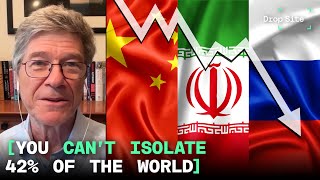
Jeffrey Sachs spricht mit Ryan Grim und Murtaza Hussain von „Drop Site“ darüber, wie Washingtons Wahnvorstellungen über die amerikanische Macht Kriege im Ausland und eine Finanzblase im Inland schüren. Ausgehend von seinen Erfahrungen aus erster Hand als Berater Russlands beim Zusammenbruch der Sowjetunion und jahrzehntelangen Studien zum wirtschaftlichen Aufstieg Asiens verfolgt Sachs die Wurzeln des amerikanischen Glaubens, die Welt beherrschen zu können. Er erklärt, warum die Bemühungen, den Iran und Russland zu isolieren, scheitern, wie US-Sanktionen Länder dazu drängen, Alternativen zum Dollar zu suchen, und was er diesen Sommer auf einer 15.000 Kilometer langen Reise von Rom nach Hongkong beobachtet hat. Sachs argumentiert zudem, dass die in die Höhe schießenden Bewertungen an den US-Aktienmärkten auf einer gefährlichen Annahme beruhen: dass die technologische Vorherrschaft der USA Bestand haben wird. Angesichts der Herausforderung dieser Vorherrschaft durch China warnt er vor einer „großen finanziellen Korrektur“, da Washingtons „geopolitische Blase“ eine Finanzblase anheizt, die seiner Meinung nach zum Platzen verurteilt ist.

0:00 1991 Yeltsin gegenüber sitzend

1:44 Die Kluft zwischen Washington und der Realität

6:00 Europäische Vorherrschaft: Ein 200-jähriger Zufall

15:15 Yeltsin und der unipolare Moment

17:00 Asiens Aufholjagd beobachten: Von Rom nach Hongkong

32:07 Warum Europa aufstieg und Amerikas ererbte Großspurigkeit

38:10 Man kann weder den Iran noch 42 % der Welt isolieren

47:23 Der als Waffe eingesetzte Dollar ist ein Wertverlust bringender Vermögenswert

58:07 Der weltweite Ausverkauf von Anleihen: Wohin fließt das Geld?

1:00:13 Die geopolitische Blase und die bevorstehende Finanzkorrektur


Jeffrey Sachs joins Drop Site’s Ryan Grim and Murtaza Hussain to discuss how Washington’s delusions about American power are fueling wars abroad and a financial bubble at home. Drawing on his firsthand experience advising Russia at the Soviet Union’s collapse and decades studying Asia’s economic rise, Sachs traces the roots of America’s belief that it can dominate the world. He explains why efforts to isolate Iran and Russia are failing, how U.S. sanctions are pushing countries toward alternatives to the dollar, and what he saw on a 15,000-kilometer road trip from Rome to Hong Kong this summer. Sachs also argues that soaring U.S. stock valuations rest on a dangerous assumption: that American technological supremacy will endure. With China challenging that dominance, he warns of a “major financial correction” as Washington’s “geopolitical bubble” fuels a financial bubble that he argues is destined to burst.

Timestamps

0:00 Sitting Across From Yeltsin in 1991 
1:44 The Gap Between Washington and Reality 
6:00 European Dominance: A 200-Year Fluke 
15:15 Yeltsin and the Unipolar Moment 
17:00 Watching Asia Catch Up: From Rome to Hong Kong 
32:07 Why Europe Rose & America’s Inherited Grandiosity 
38:10 You Can’t Isolate Iran or 42% of the World 
47:23 The Weaponized Dollar Is a Wasting Asset 
58:07 The Global Bond Selloff: Where Is the Money Going? 
1:00:13 The Geopolitical Bubble and the Coming Financial Correction

19:20

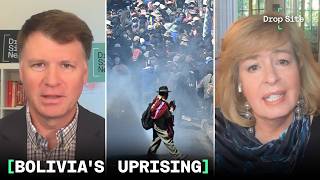
Bolivien befindet sich in einer sich verschärfenden politischen Krise. Massenproteste, Straßenblockaden und Zusammenstöße mit Sicherheitskräften breiten sich im ganzen Land aus, während der wirtschaftliche Zusammenbruch und die Wut auf die Regierung des rechtsgerichteten Präsidenten Rodrigo Paz zunehmen.

Die Journalistin und Forscherin Kathryn Ledebur berichtet gegenüber Drop Site News aus Bolivien, dass die Protestierenden den Zugang zur Hauptstadt La Paz effektiv abgeschnitten haben. Indigene Gruppen, Kokabauern, Gewerkschaften und Basisbewegungen mobilisieren gegen Sparmaßnahmen, steigende Treibstoffpreise und den Ausschluss großer Teile der Linken von der politischen Macht.

„Es gibt also verschiedene Gruppen mit unterschiedlichen Forderungen … aber sie protestieren, weil sie wahrscheinlich nächstes Jahr nicht genug zu essen haben werden.“

1:05:26

Zeitstempel

00:00 — Jeremy Scahill: Opening 
7:51 — Carlos Ron, Former Venezuelan Deputy Foreign Minister, Joins from Caracas 
9:20 — Bolivarian Revolution Still in Charge in Venezuela 
12:04 — How is the Venezuelan Government Handling This Situation? 
14:54 — Breaking Down the Trump Administration and Media Narrative 
17:10 — Who is Delcy Rodríguez, Venezuela’s Interim President? 
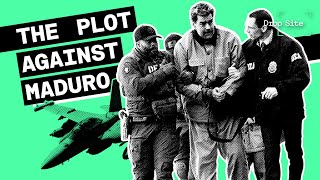
19:48 — No Evidence to U.S. Claims Against Maduro 
21:14 — ‘Acts of War’: Kidnapping Maduro and Attacking Boats in the Caribbean 
25:19 — Jack Murphy’s Report Detailing Delta Force’s Capture and Arrest Operation 
27:27 — How Did All of This Unfold? 
30:47 — Timeline of The Operation 
36:14 — Marco Rubio ‘Driving Force’ Behind This and ‘Sights Set on Havana Next’ 
37:29 — Did People Within Venezuela’s Government Collaborate With the U.S.? 
40:02 — ‘Come Get Me’: Colombia’s President Petro Dares Trump 
43:48 — Agencies Involved: JSOC, FBI, HRT, and DEA 
45:40 — U.S. No Longer Has Hegemony It Used to Have 
48:55 — U.S. Seeks to Control Continent to Compete With Global Superpowers 51: 30 — Understanding Oil Business, Reserves in Venezuela 
55:32 — Making Sense of Narratives After U.S. Military Operations 
56:44 — Trump Administration Blatant About Oil Interests in Venezuela 
1:01:01 — ‘Convictions’ and Same Government ‘Remain in Place’ in Venezuela 
1:02:57 — Jeremy: Closing