Nate Hagens (Medienpräsenz)

10:22

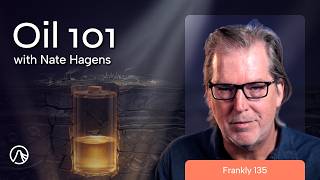
Dies ist der erste Teil einer dreiteiligen Serie über die Rolle, die Öl in der modernen Zivilisation spielt – ausgelöst durch die jüngsten Lieferengpässe und geopolitischen Konflikte rund um die Straße von Hormus. In diesem ersten Teil geht es um einige grundlegende Konzepte der Plattform „The Great Simplification“, darunter die Frage, was Öl eigentlich ist, welche Funktion es für uns hat und warum die meisten von uns nie etwas davon zu Gesicht bekommen.

Nate beginnt damit, zu beschreiben, wie Öl durch die Kompression von uraltem marinen Phytoplankton über Millionen von Jahren entstanden ist, und stellt es als eine Art Solarbatterie dar, deren Aufladung geologische Zeit in Anspruch nahm und die die Menschen innerhalb von Jahrhunderten leeren. Von dort aus skizziert er die schiere Menge an menschlicher Arbeit, die in einem einzigen Barrel Öl steckt – etwa 5 Jahre Arbeit – und skaliert dies auf eine globale Ebene. Nate nutzt diesen Rahmen, um zu zeigen, wie die Explosion von Bevölkerung, Wohlstand und Pro-Kopf-Verbrauch in den letzten 150 Jahren von einer unsichtbaren Arbeitskraft aus uraltem Sonnenlicht finanziert wurde. Er schließt mit der metabolischen Tatsache, dass der durchschnittliche Amerikaner täglich rund 200.000 Kalorien verbraucht, wenn man Heizung, Transport, Ernährungssysteme und Lieferketten mit einbezieht, und geht der Frage nach, warum wir gegenüber all dem so „energieblind“ geworden sind.

Wenn Energie die unsichtbare Arbeitskraft ist, die jedem Produkt und jeder Dienstleistung in deinem Leben zugrunde liegt, verändert das dann deine Sicht auf die Wirtschaft? Was würde es bedeuten, auch nur kurzzeitig mit einem Stoffwechsel zu leben, der näher an dem liegt, was dein Körper tatsächlich benötigt? Und wenn die Arbeit, die ein einziges Barrel Öl leistet, um ein Vielfaches mehr wert ist als sein Preis, was sagt das dann über die Systeme aus, die wir darauf aufgebaut haben?


is the first in a three-part series on the role oil plays in modern civilization, prompted by the recent flow disruptions and geopolitical conflict surrounding the Strait of Hormuz. This initial installment covers some foundational concepts of The Great Simplification platform, including what oil actually is, what it does for us, and why most of us never see any of it.

Nate begins by describing how oil formed from the compression of ancient marine phytoplankton over millions of years, framing it as a solar battery that took geological time to charge and that humans are draining in centuries. From there, he outlines the sheer amount of human labor that’s contained within a single barrel of oil – around 5 years' worth – and scales this to a global level. Nate uses this framing to show how the explosion of population, wealth, and per-capita consumption over the last 150 years was underwritten by an invisible workforce of ancient sunlight. He closes with the metabolic reality that the average American consumes roughly 200,000 calories a day when heating, transport, food systems, and supply chains are considered and assesses why we have become so “energy blind” to it all.

If energy is the invisible labor force underlying every product and service in your life, does that change the way you see the economy? What would it mean to live, even briefly, at a metabolic rate closer to what your body actually requires? And if the work performed by a single barrel of oil is worth orders of magnitude more than its price, what does it say about the systems we have built on top of it?

1:15:10

The overarching definition of success today often looks like the accumulation of stuff – money, cars, property, clothing – anything that signals wealth. This means that success is also synonymous with overshoot, extraction, and consumption – none of which lead to healthy outcomes for the planet or the global good. But what might be possible if we were to redefine success to prioritize collective well-being instead of personal gain?

In today’s episode, Nate sits down with Dutch historian and author Rutger Bregman to discuss the concept of moral ambition, which he defines as the desire to be one of the best, measured by different standards of success: not by big payouts or fancy honorifics, but by the ability to tackle the world’s biggest problems. Bregman highlights the importance of entrepreneurs in driving social change and the necessity of cultural shifts to foster a more altruistic society, as well as the challenges faced in pursuing these ideals.

What possibilities might arise if we combined the idealism of an activist with the ambition of an entrepreneur? How can we apply the principles of entrepreneurship to better address global challenges? And how could a radical redefinition of success motivate the world’s top talent to make major contributions to our most pressing issues, leaving a legacy that actually makes a difference?

About Rutger Bregman:

Rutger Bregman is a Dutch historian and author. Initially considering a career as an academic historian, Rutger instead ventured into journalism. He began his career at the Dutch newspaper De Volkskrant before moving to the independent journalism platform De Correspondent, for which he wrote for ten years. His books Humankind: A Hopeful History (2020) and Utopia for Realists: And How We Can Get There (2017) were both Sunday Times and New York Times bestsellers and have been translated into 46 languages.

In 2024, Rutger co-founded The School for Moral Ambition, a non-profit organization inspired by his latest book, Moral Ambition: Stop Wasting Your Talent and Start Making a Difference. The initiative helps people to take the step toward an impactful career.

1:42:10

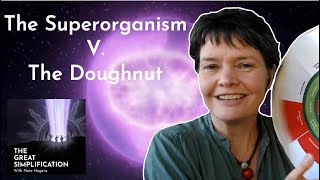
In dieser Folge diskutiert Nate mit Kate Raworth, der Begründerin der Donut-Ökonomie, über alternative Wirtschaftssysteme, die mehr als nur den materiellen Wohlstand einer Gesellschaft messen. Während wir immer weiter über die Grenzen unseres Planeten hinauswachsen, vergrößert sich die Kluft zwischen dem Lebensstandard der materiell Reichsten und den Ärmsten. Die Defizite des aktuellen Wirtschaftssystems in Bezug auf ökologisches und soziales Wohlergehen werden von der breiten Bevölkerung zunehmend erkannt. Können wir Systeme schaffen, die verhindern, dass Menschen durch das Raster fallen, und gleichzeitig die Grenzen unseres Planeten respektieren? Gibt es Regierungen und Unternehmen, die sich bereits an diesen Prinzipien ausrichten und zu einer anderen Art der Führung übergehen? Könnte der Übergang zu einem ganzheitlichen System wie „Doughnut Economics“ ausreichen, um das energiehungrige Wachstum eines globalen Superorganismus zu überwinden?


On this episode, Nate is joined by the creator of Doughnut Economics, Kate Raworth, to discuss alternative economies that measure more than just the material wealth created by a society. As we expand further past planetary boundaries, the gap between the standard of living of the materially wealthiest and poorest continues to grow. Increasingly, these shortfalls in both ecological and social well-being of the current economic system are becoming more recognized by the general populace.  Can we create systems that keep people from falling down the cracks, while also respecting the limits of our planetary home? Are there governments and businesses already aligning themselves to these principles and shifting to a different way of leading? Could moving towards a holistic system, such as Doughnut Economics, be enough to overcome the energy hungry growth of a global Superorganism?

Inhalt

00:00 - Guest Introduction 

02:03 - What was Kate’s ‘aha’ moment in economics 

05:06 - Why don’t we teach systems thinking to undergrads? 

08:57 - Doughnut Economics: 7 points 

18:04 - Kate’s thoughts on energy 

19:11 - Chart on how mankind runs itself 

19:40 - Responses to Doughnut Economics 

24:42 - How is Kate’s work being put to practice? 

29:57 - Three hats 

37:43 - How do companies adapt to a system that doesn’t depend on endless growth 

43:34 - Unpacking how Kate split up the economy 

50:13 - Kate’s lectures 

54:40 - Wealth and inequality 

59:35 - Where is Doughnut Economics best applied in the world? 

1:05:54 - Doughnut Economics scenario 

1:12:22 - Beyond Growth Conference 

1:15:46 - How does Kate and her team work? 

1:20:34 - How to create a vision of the future and apply it? 

1:27:06 - Kate’s advice to listeners 

1:29:38 - Kate’s advice to young people 

1:34:39 - What Kate cares most about in the world 

1:36:08 - What issues in the next decade is Kate most concerned about 

1:38:21 - Kate’s magic wand 

1:40:02 - Future topics of conversation